

Edge AI for Business: Real-Time Insights, Smarter Automation
Key Takeaways
- Edge AI for business enables real-time data processing directly on devices, reducing latency and improving responsiveness.
- It enhances data privacy and security by minimizing cloud dependency and keeping sensitive data on-site.
- Operational costs are reduced through lower bandwidth usage and decentralized decision-making.
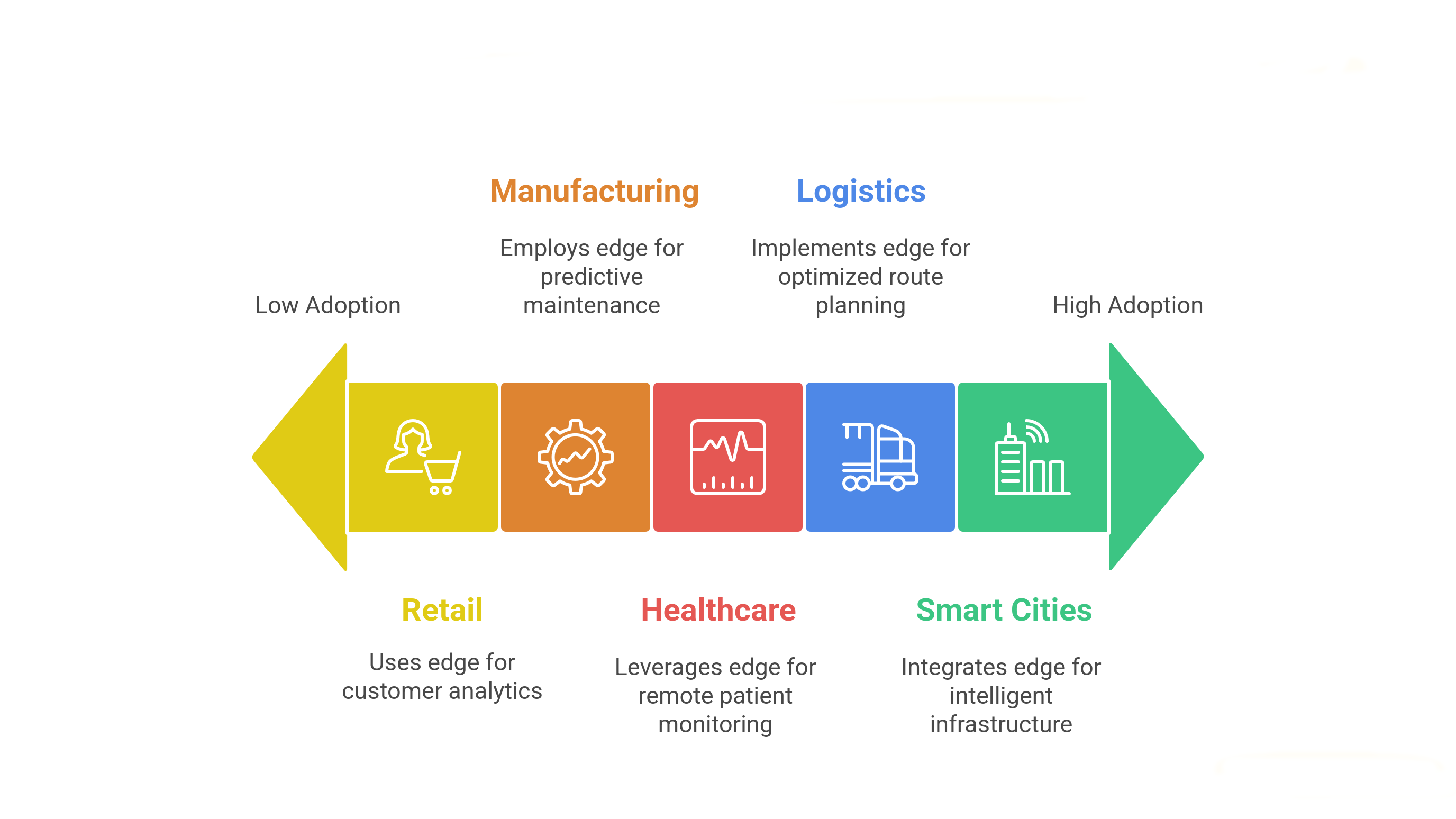
- Major industries adopting edge AI include retail, manufacturing, healthcare, logistics, and smart cities.
- A structured deployment roadmap includes use-case identification, edge environment assessment, and hybrid integration.
Introduction
In today’s digital economy, edge artificial intelligence (AI) is rapidly becoming a game-changer for businesses. “Edge AI for business” refers to deploying AI models directly on devices at or near the source of data rather than relying exclusively on centralized cloud servers. By using edge AI for business, organizations can process, analyse, and act on data in real time, improve operational efficiency, safeguard data privacy and reduce latency.
What is Edge AI?
Definition and Business Relevance
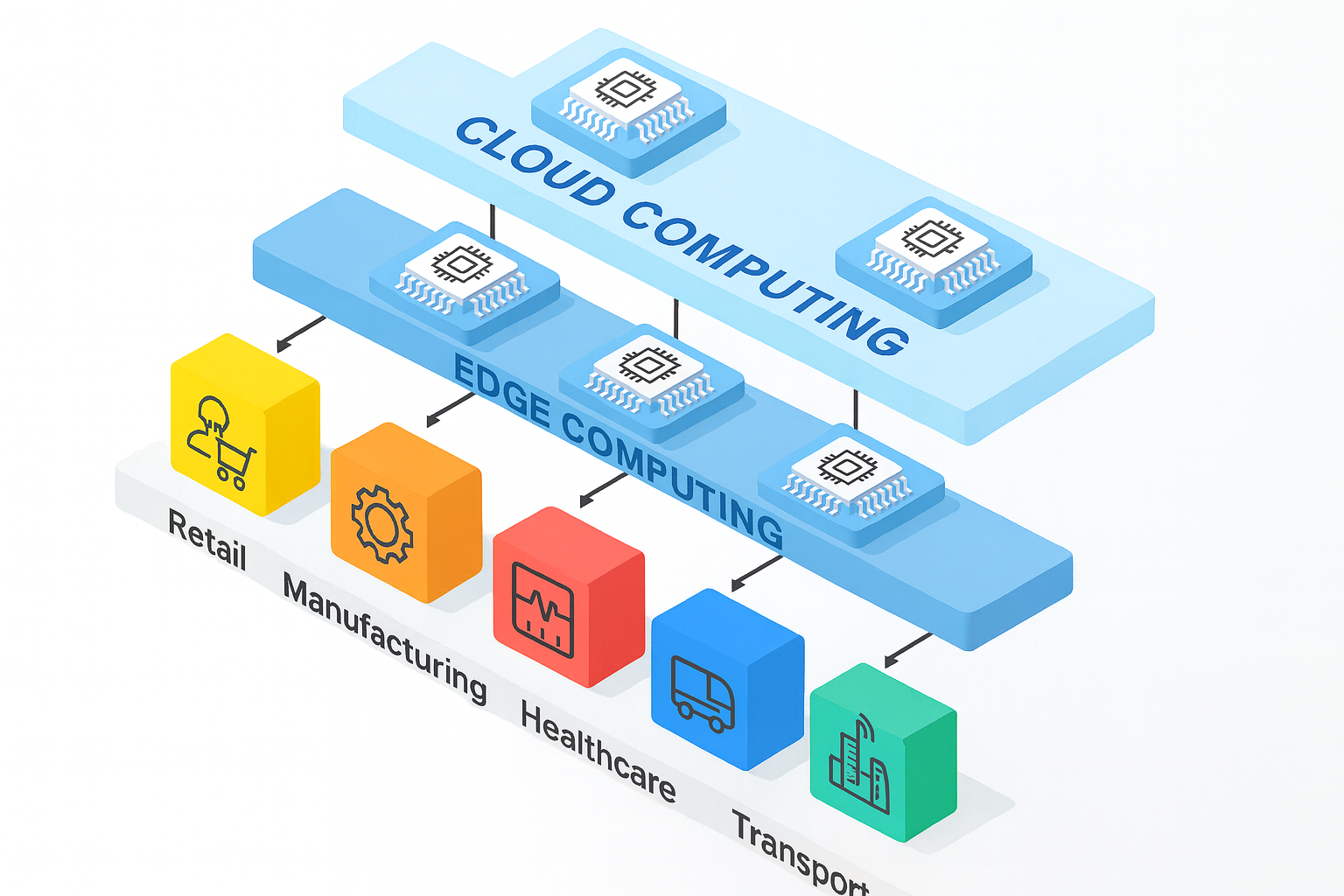
Edge AI means running machine learning models locally on devices such as sensors, gateways, smart cameras, or mobile devices, rather than sending all data back to the cloud. Using edge AI for business allows faster decision-making, lower network dependency, and better scalability in scenarios like industrial automation, retail operations and IoT ecosystems.
Did You Know: The global edge AI market was estimated at USD 20.78 billion in 2024 and projected to reach USD 66.47 billion by 2030. (grandviewresearch.com)
Key Components of Edge AI for Business
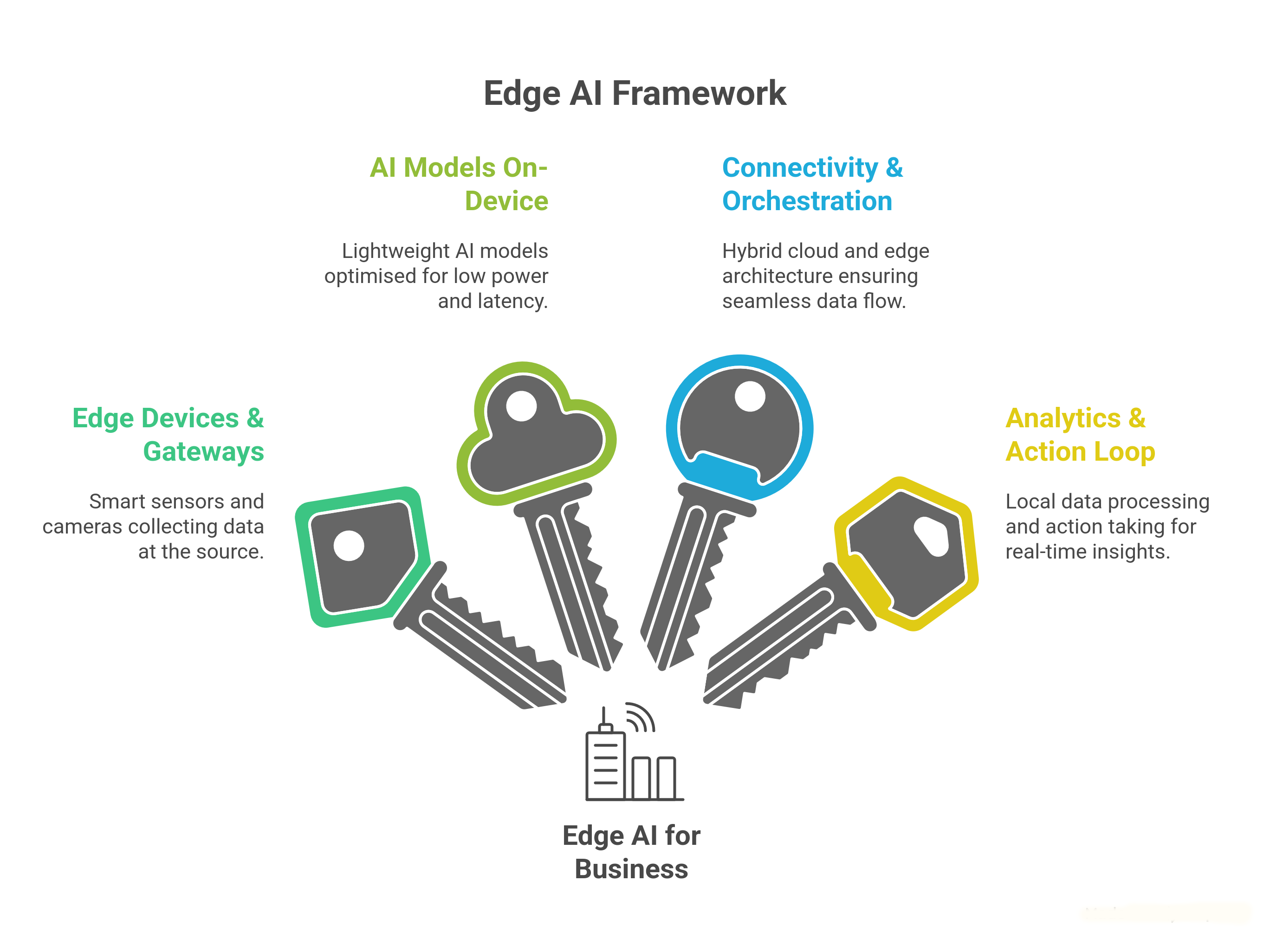
- Edge devices & gateways: Smart sensors, cameras, embedded devices
- AI models on-device: Lightweight models optimized for low power and latency
- Connectivity & orchestration: Hybrid cloud plus edge architecture
- Analytics & action loop: Data is processed, insight generated and action taken locally
Business Drivers
Businesses are adopting edge AI for several reasons:
- Real-time responsiveness (low latency)
- Reduced data transfer and associated costs
- Enhanced data privacy and security (data remains on-device)
- Scalability in remote or bandwidth-constrained environments
- Enabling new business models (smart predictive maintenance, autonomous systems)
Benefits of Edge AI for Business
Operational Efficiency & Cost Reduction
Businesses using edge AI for business workflows can see dramatic gains. For example:
- Local processing means less dependence on cloud bandwidth and infrastructure
- Real-time detection of anomalies or events leads to faster mitigation (in manufacturing, logistics, retail)
- Edge AI supports decentralized operations (remote sites, mobile fleets) which lowers latency and improves uptime
Did You Know:The edge AI hardware market alone is projected to reach USD 58.90 billion by 2030. (marketsandmarkets.com)
Data Privacy & Compliance
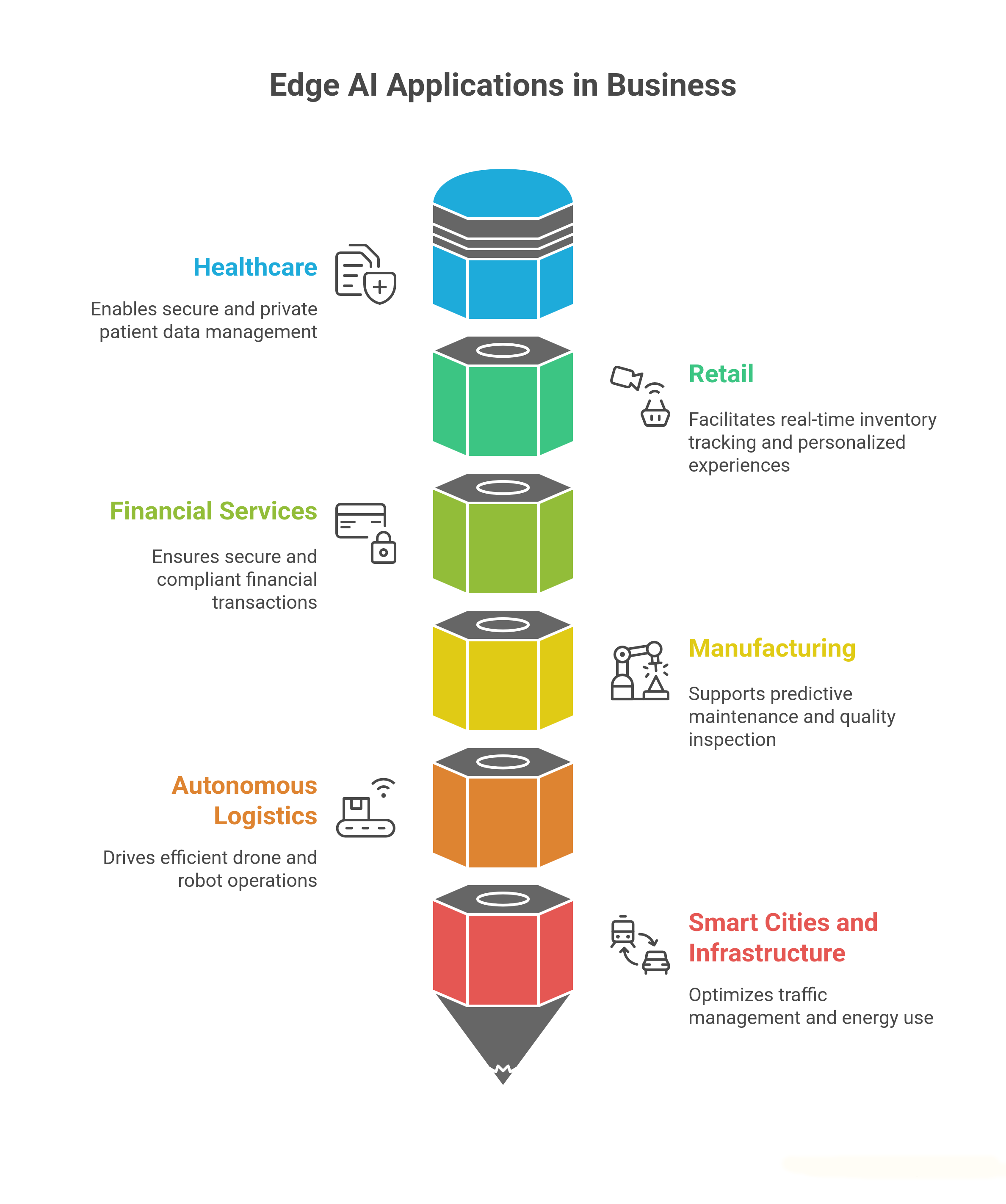
Edge AI for business enables data to be processed locally on device, limiting the need to send sensitive information to the cloud. This is especially relevant for industries such as healthcare, retail, and financial services.
Business Innovation & New Use-Cases
Edge AI for business paves the way for innovative scenarios:
- Smart retail (real-time inventory tracking, personalized in-store experiences)
- Manufacturing (predictive maintenance, quality inspection in real time)
- Autonomous logistics (drones, robots)
- Smart cities and infrastructure (traffic management, energy optimization)
Challenges When Implementing Edge AI for Business
Technical & Organizational Hurdles
Model Deployment & Resource Constraints
Edge devices often have limited computation, energy, storage and connectivity — deploying AI models that are accurate yet efficient is a major challenge.
Data Management & Governance
Edge AI for business requires robust data governance across distributed nodes. Ensuring consistency, update-management, security and compliance is complex.
Integration & Hybrid Architecture
Organizations need to integrate edge AI with existing cloud systems, data pipelines and business workflows. This hybrid architecture requires careful planning.
Skills & Change Management
Deploying edge AI for business also means organizations must develop new capabilities: edge device management, embedded AI engineering, cybersecurity for edge nodes, and business change-management.
Did You Know: The edge AI market may reach USD 143.06 billion by 2034. (precedenceresearch.com)
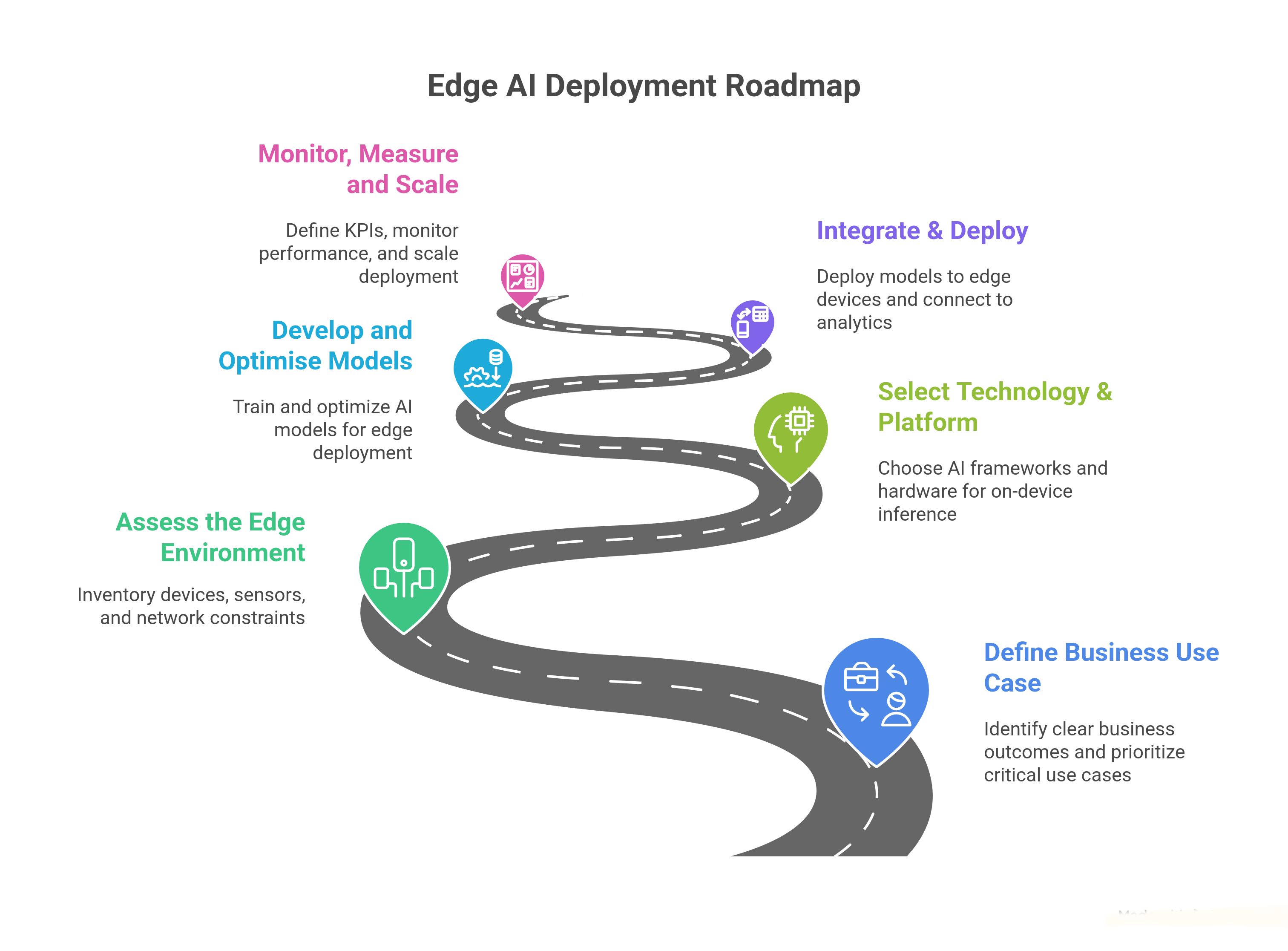
How to Deploy Edge AI for Business: A Step-by-Step Roadmap
Step 1: Define Business Use Case
- Identify clear business outcomes (e.g., reduce downtime, improve engagement)
- Prioritize use-cases where latency, bandwidth or data-privacy are critical
Step 2: Assess the Edge Environment
- Inventory devices, sensors, and network constraints
- Evaluate device capabilities (CPU/GPU, memory, connectivity)
- Determine data flows and latency requirements
Step 3: Select Technology & Platform
- Choose edge-capable AI frameworks (TensorFlow Lite, ONNX Runtime)
- Select hardware supporting on-device inference
- Plan connectivity: local network, 5G, WiFi, mesh
Step 4: Develop and Optimise Models for Edge
- Train AI models centrally, optimize for edge (quantitation, pruning)
- Validate performance under real-world conditions
- Plan updates and maintenance
Step 5: Integrate & Deploy
- Deploy models to edge devices and monitor
- Connect edge nodes to central analytics as needed
- Implement offline fallback
Step 6: Monitor, Measure and Scale
- Define KPIs (latency reduction, cost savings)
- Monitor device health, model accuracy
- Scale from pilot to full deployment
Did You Know: Over 90% of SMEs using AI report revenue growth and cost reductions up to 30%. (arxiv.org)
Industry Applications of Edge AI for Business
Manufacturing & Industry 4.0
Edge AI for business enables real-time predictive maintenance, instant quality inspection, and responsive robotic controls.
Retail & Smart Stores
Retailers leverage edge AI for business through real-time in-store analytics, shopper tracking, inventory monitoring and checkout automation.
Healthcare & Remote Monitoring
Edge AI for business in healthcare supports real-time patient monitoring, diagnostics and telemedicine in limited connectivity environments.
Transportation & Logistics
Autonomous systems benefit from edge AI for business where low latency and local decision-making are essential.
FAQ
What is the difference between edge AI and cloud AI?
Edge AI processes data locally, while cloud AI relies on centralized servers. Edge AI reduces latency, enhances privacy and improves efficiency.
When should a business choose edge AI versus cloud AI?
Choose edge AI for business when latency, privacy, or connectivity are concerns. Use cloud AI for heavy compute and large-scale training.
How much does edge AI cost for businesses?
Costs depend on hardware, integration, and scale. The edge AI hardware market is forecast to reach USD 58.9 billion by 2030. (marketsandmarkets.com)
What are the key risks of deploying edge AI?
Risks include device vulnerabilities, model drift, complex updates, and integration challenges. Careful planning is essential.
How can small and medium-sized businesses use edge AI?
SMBs can start with small pilots: smart cameras, local analytics or predictive maintenance. Validate outcomes, then scale up.
Conclusion
Edge AI for business is one of the most strategic shifts in modern technology. By processing data at the source, organizations gain real-time insights, cost efficiency and stronger privacy. From retail to robotics, businesses are embracing edge AI for competitive advantage.
Related Articles:
Parallel Processing: The Key to Affordable AI Agents for SMBs
An Article by N Delgado 2025 | CMO | AI Software Systems | AI Consultants For Business